

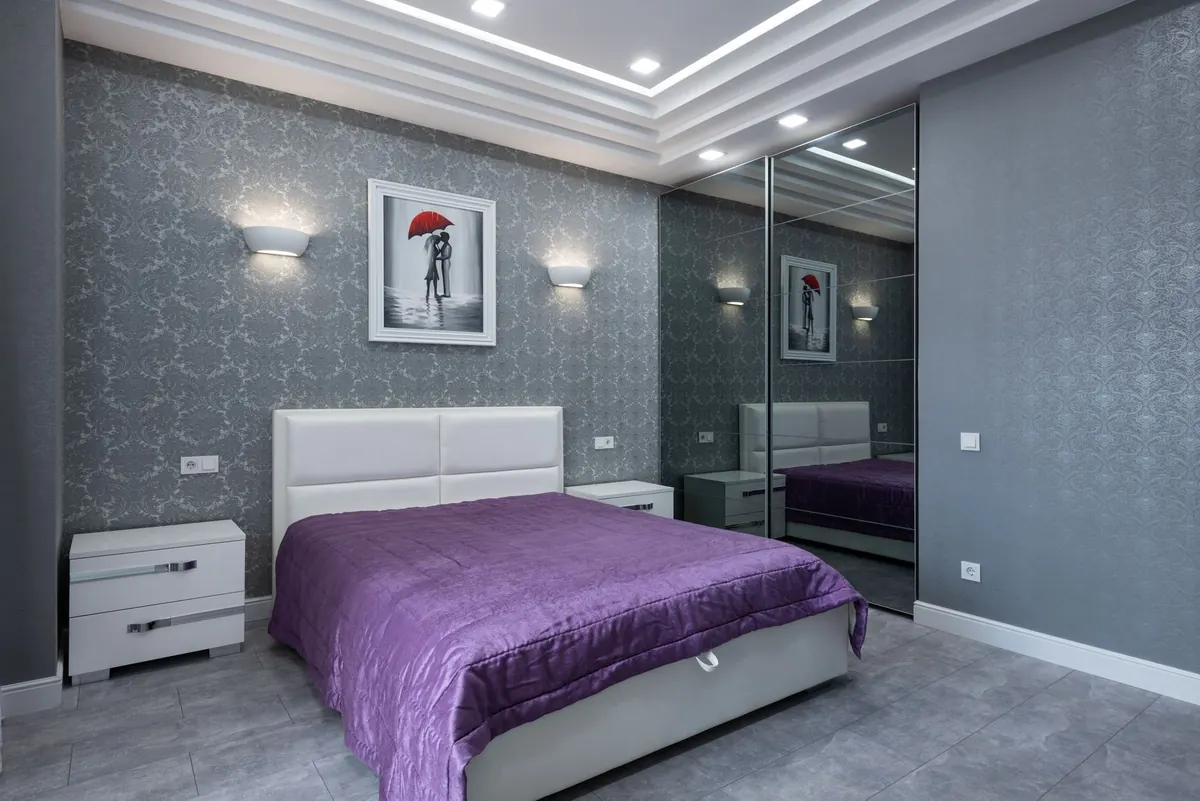
Grey is a dependable choice for a bedroom. It recedes, it flatters most wood tones, and it feels tidy in a way stronger colours rarely do. The problem is that grey on its own can read as cold, especially in a north-facing room or a period property with tall ceilings and single-glazed sash windows. Lilac solves that neatly. It carries enough pink and violet warmth to soften grey without shouting, and it sits happily in both modern and older homes. Here is how to put the two together so the result feels restful rather than clinical.
Why Lilac and Grey Work Together
Lilac is a tint of violet, which means it is already partway to being a neutral. Once you add grey to it, you get a dusty, muted tone that is far easier to live with than a sweet pastel. Grey then supplies the structure: it keeps the walls quiet, gives the eye somewhere to rest, and makes lilac look considered rather than nursery-bright.
The pairing also suits British light. Our daylight is often soft and slightly blue, which flatters grey but drains warmth from a room. Lilac puts some of that warmth back without turning everything yellow or peach.
Choose Your Lilac by the Light You Have
Lilacs behave very differently once they are on a wall, so start with undertone rather than shade name. Broadly, you are choosing between four families:
- Chalk lilac. Barely lilac at all — a whisper of pink-violet in white. Ideal for small rooms and north-facing bedrooms where stronger colour would close in.
- Dusty mauve. The mid-tone workhorse. Looks good behind a headboard and holds its own next to grey without becoming the whole story.
- Greyed lilac. Lilac with grey already mixed through it. The easiest match for almost any grey, and the safest choice if you are nervous about pastels.
- Deep violet-lilac. Dramatic and slightly moody. Best kept to panelling, alcoves or a small en suite, and it needs decent lighting to avoid looking murky.
A quick test
Hold your lilac sample against a plain sheet of white paper, then against the grey you intend to use. If the lilac suddenly looks yellow or green, its undertone is fighting the grey. If it looks pinker and softer, you have a match.
Then Get the Grey Right, Too
Grey is not one colour. Warm greys — greige, mushroom, dove — have a little red or yellow in them and feel cosy. Cool greys lean blue or green and feel crisper. As a general rule, pair warm with warm and cool with cool, unless you deliberately want the contrast.
For most bedrooms, keep one shade clearly dominant. A rough guide of two-thirds grey to one-third lilac, with a small amount of a third tone such as off-white, charcoal or natural wood, gives the room a settled feel. Paint woodwork in soft off-white rather than brilliant white, which can make grey look grubby and lilac look washed out. In a small room, painting skirting and door frames in the same grey as the walls blurs the edges and makes the space feel larger.
Ten Lilac and Grey Bedroom Ideas
- Lilac behind the headboard, warm grey elsewhere. Paint one wall in dusty mauve and the other three in a warm dove grey. The eye goes straight to the bed, and the room avoids feeling boxed in.
- Grey walls, lilac in the textiles only. The low-commitment option, and a good one for renters. Mid-grey walls, then lilac bedding, a throw and a couple of cushions. Swap the bedding and the room changes completely.
- Half-and-half with panelling. Tongue-and-groove or slatted panelling painted grey to dado height, with pale lilac above. This works particularly well in Victorian terraces with high ceilings, because it visually lowers the room.
- A grey bed against lilac walls. Reverse the usual arrangement: grey upholstered headboard and base, soft lilac on all four walls. Lilac on its own can turn sweet; grey furniture anchors it.
- One muted lilac-grey on everything. Walls, ceiling and woodwork in the same greyed lilac, then layer wool, linen and a chunky knit to stop it looking flat. This is the calmest version of the scheme.
- Grey underfoot, pale lilac above. Grey carpet, painted floorboards or a large grey rug, with chalk lilac on the walls. Cool below and warm above reads as restful from the pillow.
- Deep lilac in an alcove or en suite. Alcoves either side of a chimney breast, or a small en suite, can take a much stronger violet. Keep the main bedroom grey so the drama stays contained.
- A barely-there lilac ceiling. Quiet and surprisingly effective, especially with a grey that has a green or blue undertone. It adds warmth you can feel rather than see.
- Pattern on one wall. A wallpaper with small lilac sprigs or abstract marks on a grey ground, used behind the bed or inside a wardrobe. Pick the plain paint from the background colour of the paper so the two genuinely match.
- Warm light and warm metal. Aged brass or pewter bedside lamps, and bulbs around 2700K. Cool white light turns lilac grey and grey blue — the usual reason a scheme that looked lovely in the shop looks sad at home.
Small Details That Keep It Warm
Colour does most of the work, but texture finishes the job. Add a wool rug beside the bed, lined curtains in a grey that matches your walls, and a linen blind rather than a plastic one. Wood brings instant warmth: oak, ash or walnut on a bedside table or stool will stop grey and lilac feeling like a showroom. A single plant, a fabric lampshade and one inherited piece of furniture you actually like will do more for the room than another cushion.
Test the Colours Before You Commit
Tester pots are cheap and tiny painted patches are useless. Instead, paint two coats onto a sheet of A2 lining paper, leave it to dry, and tape it to the wall. Live with it for a few days and look at it at the times you actually use the room — early morning, and again at nine at night with the lamps on.
Check it from the bed, from the doorway and from the landing. If the lilac looks grey and the grey looks blue, you have chosen cool undertones; go one step warmer in both. If the lilac looks pinker than you expected, it is picking up warmth from the light, and a slightly more greyed shade will settle it.
Get those two decisions right — the shade of lilac and the temperature of the grey — and the rest is straightforward. Everything else in the room can stay simple, which is exactly what a bedroom needs.
Photo: Max Vakhtbovych / Pexels