

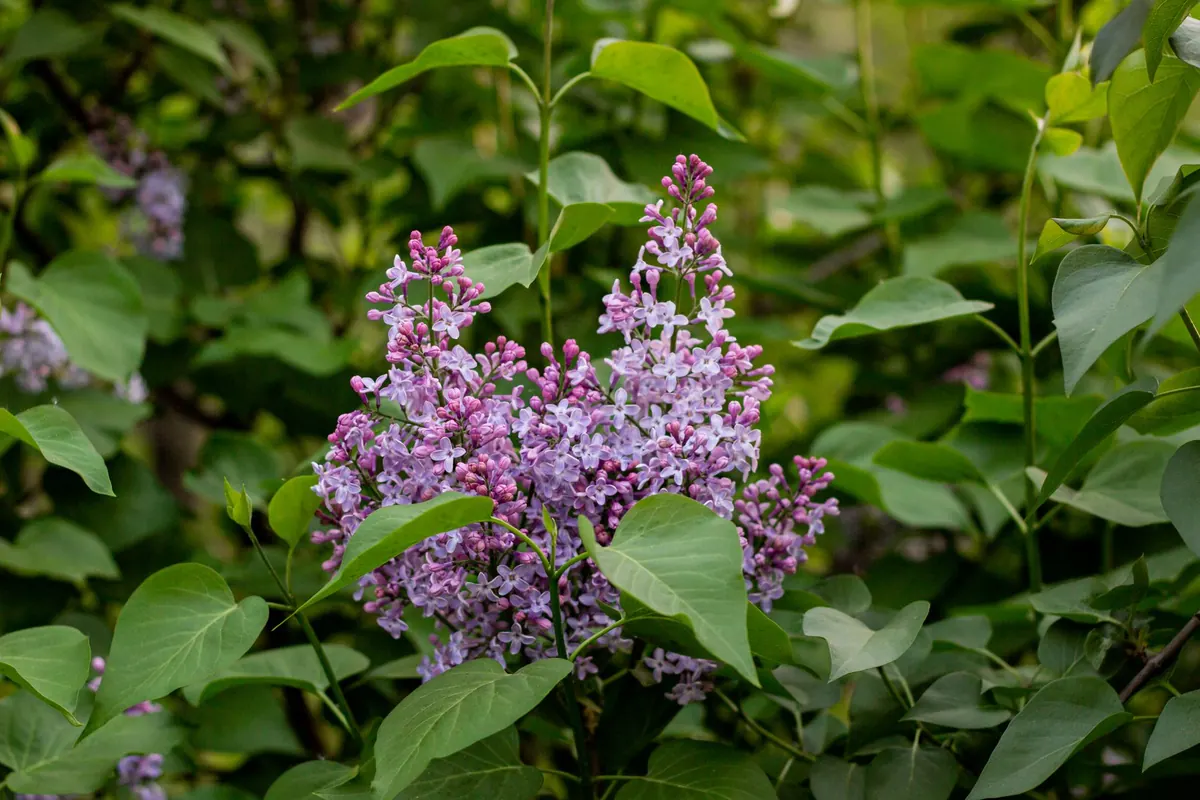
Common lilac, Syringa vulgaris, is one of those shrubs that rewards a little restraint. Cut it at the wrong moment and you remove the very wood that would have carried next spring's scent. Cut it at the right moment and it stays full, healthy and generous. In UK gardens, the difference usually comes down to a few weeks in early summer.
Why timing matters
Common lilac flowers on old wood: the stems it grew the previous year. Flower buds are formed in summer, then sit tight through winter before opening in May or early June. That means any pruning in late winter or spring removes potential blooms. If you cut all over in March, you get leaves and regret, but very few flowers.
There is a second reason to prune after flowering. Removing spent trusses stops the plant putting energy into seed heads. It also lets light and air into the centre, which reduces the risk of problems in a dense shrub. The aim is not to tidy it into a box. It is to keep a natural shape with young, vigorous stems coming through.
Think of it this way: a lilac bud is decided almost a year in advance. By the time you see new growth in spring, the flower clusters for that year are already formed inside the buds. Pruning then is like cancelling a booking you have already paid for. Instead, work with the plant's cycle. Let it flower, enjoy the scent, then step in with the secateurs.
The best time to prune common lilac
For most UK gardens, the main pruning window is immediately after flowering, usually late May to mid-June. Deadhead as the flowers fade, then finish any shaping by the end of June. If you garden in a colder area and lilac flowers in late June, prune in early July. The important point is to do it straight after the blooms go over, not weeks later.
Dead, damaged or diseased wood can be removed at any time. Suckers can also be dealt with whenever you notice them. Everything else waits for the post-flowering window.
In mild coastal or southern gardens, lilac may finish by mid-May. In northern Scotland or exposed sites, it can be early July. Watch your own shrub rather than the calendar. The signal is simple: when the last flowers turn brown and drop, the pruning window opens.
Month-by-month lilac pruning calendar
January and February
This is dormant season. If you need to renovate an overgrown lilac, late February is a sensible time, just before growth starts. Remove dead, damaged and crossing branches. You can take out one or two of the oldest stems at the base. Accept that you may lose most flowers that year. If flowers matter more, restrict yourself to dead wood and suckers.
For example, an old lilac that has become a thicket of dry stems can be reduced by a third in late February. Cut the oldest, thickest trunks right down to 30–45 cm from the ground. New shoots will emerge from the base. You will sacrifice a season of bloom, but the following year the shrub will be rejuvenated.
March
Buds are swelling and flower buds are already in place. Avoid pruning. Finish any structural work in the first few days of the month only if it cannot wait. Remove suckers by pulling or cutting them below soil level. Do not tip back branches to tidy them.
April
Flower buds are visible and the shrub is preparing to bloom. No routine pruning. If frost has damaged a shoot, leave it until after flowering, then cut back to healthy wood. Dead or broken branches can still be removed.
May
Lilac is in flower. Deadhead individual trusses as they fade. Cut the spent flower head back to a strong pair of leaves or a sideshoot, leaving the young growth below intact. This is a gentle job, not a renovation. If your lilac is not flowering, wait until its usual flowering time has passed before doing anything more.
June
This is the main pruning month for common lilac in most of the UK. Once flowering has finished, within two or three weeks, shape the shrub and thin it if needed. Cut back flowered shoots to a sideshoot or a pair of buds. Remove one or two of the oldest stems at the base if the bush is crowded. Take out weak, crossing or rubbing growth. Finish by the end of June if you can.
July
The window is closing. Early July is your last chance for light shaping in cooler areas. After mid-July, leave the shrub alone apart from dead, damaged or diseased wood and suckers. Next year's flower buds are forming, and late pruning will cost you blooms.
August and September
No pruning. Keep the secateurs away. The shrub is now setting next year's flower buds, and any cut you make will remove potential blooms. You can still remove dead or diseased wood, and suckers can be pulled or cut below ground. Water young lilacs in dry spells, but do not feed them with a high-nitrogen fertiliser, which encourages soft growth that may not harden before winter.
October
Leaves are falling and the shrub is going dormant. Still no pruning needed. You can tidy around the base, clear fallen leaves if they are diseased, and mulch with well-rotted compost or leaf mould. Do not cut back stems. The flower buds are already set and will sit tight through winter.
November and December
Dormant season again. Unless you are removing dead, damaged or diseased wood, leave the lilac alone. If you want to prune for shape, wait until late February. Pruning now risks stimulating new growth in a mild spell, which could be damaged by frost. It also removes flower buds you cannot see. Enjoy the structure of the bare shrub and plan for next year's display.
How to deadhead lilac correctly
Deadheading is the most useful job you can do in late spring. It stops seed formation and keeps the shrub tidy without sacrificing next year's flowers. Here is the method:
- Wait for the flowers to fade. The truss will turn brown and dry, but the stem below will still be green.
- Find the first strong pair of leaves or a sideshoot below the flower head. This is where you cut.
- Use sharp secateurs or snips. Make a clean cut just above that pair of leaves. Do not cut into bare old wood.
- Remove the spent truss. Take it away and compost it, unless the plant has disease.
Do not shear the whole shrub over with hedge trimmers. That removes the young growth that will carry flowers next year. Hand-pruning is slower but far better for lilac.
Renovating an overgrown lilac
Old lilacs can become leggy, with flowers only at the top and a tangle of dead stems below. You can renovate them, but it takes two or three years if you want to keep some flowers. Here is a gentle approach:
- Year one: After flowering, remove one-third of the oldest stems at the base. Cut them as low as you can. Also remove any dead, damaged or crossing branches.
- Year two: Repeat with another third of the old stems. By now, new shoots should be growing from the base.
- Year three: Remove the remaining old stems. Keep the best new shoots spaced evenly around the shrub.
If you need a hard reset, cut the whole shrub back to 60–90 cm in late February. It will look drastic, but lilac usually regrows vigorously. You will lose a year or two of flowers. Feed and mulch after pruning to support new growth.
Common mistakes to avoid
- Pruning in late winter or spring. This removes flower buds that formed the previous summer. You get leaves, not blooms.
- Cutting into old wood without reason. Lilac does not always regrow from very old, thick stems. Prune to young growth where possible.
- Using hedge trimmers. They cut indiscriminately and leave a stiff, unnatural shape. Use hand secateurs.
- Neglecting suckers. Common lilac is often grafted, and suckers from the rootstock can take over. Pull them off when small.
- Overfeeding. Too much nitrogen produces leafy growth at the expense of flowers. A mulch of compost in autumn is usually enough.
Tools and aftercare
You need sharp bypass secateurs for stems up to 1 cm, loppers for thicker branches, and a pruning saw for old trunks. Clean your tools between plants to avoid spreading disease. After pruning, give the shrub a mulch of well-rotted manure or compost, but keep it away from the trunk. Water well in dry spells during the first year after renovation.
Lilac rarely needs feeding. If growth is poor, a balanced fertiliser in early spring is better than a high-nitrogen one. Remember that the reward for correct timing is a shrub that flowers reliably for decades. A little patience in June pays off in May.
Prune lilac with the flowers, not against them. Cut after the bloom, and you keep both the shape and the scent.
Photo: Natalia Sevruk / Pexels